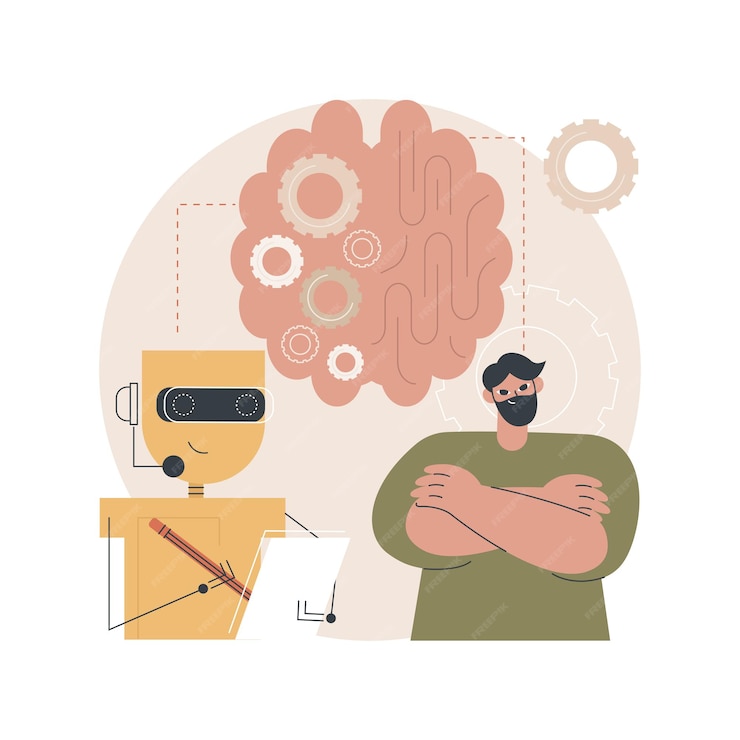
Applying Machine Learning Algorithms to Big Data in Advanced Manufacturing

When it comes to advanced manufacturing, there is this remarkable fusion of cutting-edge technologies that has taken centre stage in ushering a new era of productivity and efficiency. Among these technological modernisers, Machine Learning (ML) stands tall, brandishing its transformative powers over vast oceans of data. ML has the ability to analyse great amounts of historical data, and by doing this, it prompts manufacturers to predict and prevent disruptions in their operations.

With its recognition of different patterns and deciphering causal relationships, ML algorithms offer a glimpse into the future, enabling timely interventions that avert breakdowns and downtime. The result? Boosted efficiency and reduced costs that set the stage for unprecedented productivity!

Yet, the impact of ML stretches far beyond predictive prowess. Its algorithms skillfully coordinate machines on the manufacturing floor, optimizing schedules and reducing blockages. This synchronization brings vitality to the production line, reduces waste and cuts expenses. Each well-coordinated step unlocks the greatly sought improved efficiency and superior performance for manufacturers.

In order to fully unleash the power of ML, nowadays, manufacturers are combining it with other cutting-edge technologies, such as Computer Vision: a branch of artificial intelligence that allows computers and systems to extract information from different visual inputs and act upon that information.[1] This collaboration enables automated quality control and precise anomaly detection. From identifying flaws to ensuring stringent adherence to specifications, this combination is elevating manufacturing to new heights of accuracy and excellence.

So in this era of advanced manufacturing, where knowledge is power, ML stands as a game-changer! And when manufacturers apply ML algorithms to Big Data, they are prone to unlocking untapped potential, optimizing operations, and embarking on a journey of continuous improvement.

References:

  1. What is computer vision? https://www.ibm.com/topics/computer-vision (accessed June 8th, 2023).

Bridging the Skills Gap: Addressing the Challenges in Advanced Manufacturing

Advanced manufacturing has emerged as a pivotal sector in the global economy, driving innovation, productivity, and economic growth. However, the rapid technological advancements and transformative changes in manufacturing processes have created a significant challenge: the skills gap. The skills gap refers to the disparity between the skills required by employers in advanced manufacturing and the skills possessed by the available workforce. In this article, we will explore the factors contributing to the skills gap in advanced manufacturing and discuss strategies to bridge this gap and foster a skilled and adaptable workforce.

The dynamic nature of advanced manufacturing, characterized by automation, robotics, additive manufacturing, and data analytics, demands a highly skilled workforce. However, technological advancements are occurring at a rapid pace, often outpacing the acquisition of necessary skills by the workforce. This creates a gap between the existing skill sets of workers and the evolving needs of the industry, hindering the industry’s growth potential.

Education and training play a vital role in equipping individuals with the skills needed for advanced manufacturing. However, traditional educational systems often struggle to keep pace with the rapidly evolving industry requirements. The curriculum may be outdated, lacking the necessary focus on emerging technologies and advanced manufacturing processes. Additionally, there is a shortage of specialized training programs and apprenticeships that provide hands-on experience and practical skills development. Collaborations between educational institutions and industry leaders are essential to ensure that the curriculum aligns with the industry’s needs and to facilitate experiential learning opportunities.

Science, Technology, Engineering, and Mathematics (STEM) education forms the foundation for a skilled workforce in advanced manufacturing. Encouraging young students to pursue STEM subjects and careers can help bridge the skills gap. This can be achieved through engaging, hands-on learning experiences, mentorship programs, and partnerships between educational institutions and industry professionals. Initiatives that highlight the real-world applications of STEM concepts and promote diversity and inclusivity within the field can attract a broader talent pool to advanced manufacturing.

To bridge the skills gap, investing in upskilling and reskilling programs is crucial. These programs provide existing workers with opportunities to learn new technologies, acquire advanced manufacturing skills, and adapt to evolving job requirements. Employers can collaborate with training providers, industry associations, and government agencies to develop targeted programs that address the specific needs of the workforce. Such initiatives can empower individuals to upgrade their skills, enhance career prospects, and contribute to the growth and competitiveness of the advanced manufacturing industry.

Moreover, collaboration between industry and academia is vital for addressing the skills gap. Employers can work closely with educational institutions to develop industry-aligned curricula, establish internship programs, and provide input on emerging skills requirements. Industry-academia partnerships can also facilitate knowledge transfer, research and development collaborations, and the identification of emerging trends, ensuring that educational institutions produce graduates who are equipped with the skills needed for the advanced manufacturing sector.

Bridging the skills gap in advanced manufacturing is essential for sustained industry growth, competitiveness, and innovation. By addressing the challenges through focused efforts, including promoting STEM education, enhancing education and training programs, and fostering collaboration between industries.

The DTAM program aims to provide Advanced Manufacturing technicians with knowledge and skills in diverse technologies applied, such as Big Data and Machine Learning. Read more about our mission here.

Featured image credit: NWIRC.

Integration of additive manufacturing into digital manufacturing ecosystems

Additive Manufacturing (AM), or 3D printing, is transforming the manufacturing industry by enabling the production of complex and customized parts with reduced waste and shorter lead times. Integrating AM into digital manufacturing ecosystems streamlines the design process by seamlessly transferring digital designs from CAD software to AM machines [1].

Collaboration and supply chain optimization are enhanced through real-time communication and data sharing among stakeholders. This enables just-in-time manufacturing and minimizes the need for extensive warehousing and inventory management [2].

The integration of AM enables customization and personalization at scale, leveraging customer data and feedback to meet individual preferences and market demands, particularly in industries like healthcare, aerospace, and consumer goods [3].

Quality control and process monitoring benefit from real-time data collection, analysis, and feedback during AM operations. Advanced sensors and analytics ensure consistent part quality and identify defects or deviations [4].

Despite challenges, the integration of AM into digital manufacturing ecosystems continues to shape the industry, driving innovation and efficiency.

So, what’s the next big thing for additive manufacturing? Watch the video from Hexagon Manufacturing Intelligence, to learn how leading industry experts answered this question.

References:

[1] International Journal of Precision Engineering and Manufacturing (IJPEM), Volume 19, Issue 6, pp. 909–922, June 2018.

[2] Procedia Manufacturing, Volume 22, pp. 670-677, 2018.

[3] International Journal of Production Research, Volume 56, Issue 8, pp. 2775-2794, 2018.

[4] Journal of Manufacturing Science and Engineering, Volume 141, Issue 7, 2019.

Image credit: Image by fabrikasimf on Freepik.

How Digital Twins are Revolutionizing the Manufacturing Industry

Wouldn´t it be great to simulate things varying from toasters to planes, modify processes and prevent problems or even accidents before investing real-world resources into actual implementation? That’s what digital twins are able to offer.

But what are digital twins? They are exact virtual representations of physical objects, processes, or even systems that allow for real-time monitoring, analysis and optimization, before the actual object etc. has taken its final form. More specifically, by collecting data from sensors and other sources, it is possible to create a digital twin that accurately reflects the performance of a physical system.

Digital twins can be useful in a lot of sectors, but their popularity and use in the manufacturing section increase day by day.

One of the greatest things digital twins can offer is the ability to optimize production processes. A digital twin of a production line can simulate and enhance the overall performance of the system, identifying possible bottlenecks and inefficiencies beforehand to reduce maintenance issues and optimize the production process. In addition, digital twins can help improve the manufacturing process by identifying quality issues and ensuring that the final product meets the required quality standards. For instance, thanks to these practices, Boeing was able to achieve a 40% improvement rate in first-time quality of parts.

The use of digital twins in advanced manufacturing is not limited to the production line or product design. They can also be used to monitor and optimize the performance of machines and robots.  Practically, we can simulate all kinds of robots, from robot vacuums to humanoids that could potentially ruin the world, and observe its movements, actions, and interactions with other objects in a virtual environment. This can help identify potential issues with the robot’s design or programming and optimize its performance before it is deployed in the real world. By doing so, the downtime could be reduced while the manufacturing process could overall become more efficient. Even when they are launched, by collecting data, it is possible to create a digital twin that accurately reflects the performance of the physical robot. Like that, the robot’s movements can be monitored, possible issues could be identified, and performance could be optimized in real-time. And who knows, you could potentially save the world.

However, it´s not all daisies and roses. Some big problems may occur. One of them is data privacy and cybersecurity. Digital twins rely on the collection of data from various sources, including sensors, machines, and people. It is important to ensure that the data collected is secure and that privacy concerns are addressed. In this case, companies should be obliged to have policies and procedures in place to protect sensitive data and ensure that it is not shared or used inappropriately. Furthermore, digital twins are only as good as the data that is used to create them. Errors in the data can lead to incorrect conclusions and suboptimal decisions.

Last but not least, the subject could raise ethical concerns, especially when monitoring individuals or making decisions that affect them. Furthermore, the potential for bias and discrimination is raised. If the data used to create a digital twin is biased or incomplete, it could lead to discriminatory practices that impact certain groups of people. It is therefore important to ensure that the data used is accurate, validated, and reliable. In addition, questions about accountability and responsibility can be raised. If decisions are made based on the analysis of digital twin data, who is responsible for those decisions? Should there be transparency around how digital twin data is used and who is making decisions based on that data?

In conclusion, in today’s fast-paced manufacturing world, digital twins have emerged as a game-changing technology, offering businesses the ability to optimize processes, reduce downtime, and improve product quality. However, as with any powerful technology, there are also risks and ethical concerns to consider. By carefully balancing the benefits and potential downsides, businesses can harness the power of digital twins to transform their operations and stay ahead of the competition.

Featured image credit: Freepik.

Da Vinci College Initiates Second Pilot Round of “IoT and Sensors” Module in DTAM Project

Some while ago we told you about how our partners from Apro Formazione and Txorierri are running a combined exercise as part of the DTAM pilot training activities. Today, we would like to the same and let you know how the piloting activities are going on the other end of Europe i.e. the Netherlands.

Da Vinci College, a key partner in the international DTAM project (Digital Transformation in Advanced Manufacturing), is committed to providing students with a cutting-edge education. The European DTAM project focuses on various subjects such as cybersecurity, IoT and sensors, Big data, Machine learning, and Transversal skills, empowering students with the knowledge necessary to excel in the rapidly evolving field of advanced manufacturing.

On Monday, May 15th, a group of 55 vocational (EQF level 4) students embarked on the second pilot round of the “IoT and Sensors” module. These students follow a 3-year curriculum for “software developer”, consisting of 2 years at school and 2 internships at a software development company.

The “IoT and Sensors” module plays a vital role in the DTAM project, exploring the principles of the Internet of Things (IoT) and the significance of sensors in transforming manufacturing processes.

Under the guidance of their instructors, Da Vinci College students will engage in a comprehensive module comprising lessons and exercises designed to deepen their understanding of the Internet of Things. The module encompasses various topics, including sensor technologies, data collection and analysis, connectivity, and the application of IoT principles in industrial contexts.

The pilot will end with a challenge, where students are asked to solve a real-world problem by creating a prototype device. In our case, the challenge consists of building a temperature/air humidity sensor device to monitor climate conditions in a building and to warn when dangerous levels are reached.

Through their participation in the pilot round, students will not only acquire in-depth knowledge but also provide valuable feedback for further refinement of the module. This collaborative approach ensures continuous improvement and an enhanced learning experience for future students.

Da Vinci College takes great pride in its partnership with the DTAM project. By enabling students to explore the latest advancements in digital transformation, the college prepares them for the challenges of advanced manufacturing.

Da Vinci College extends its appreciation to the teachers, project partners, and students involved in this project!

ThINKER LAB project – Tinkering Laboratories for inclusive and active learning

Creating a professional training program for technicians with the necessary skills to facilitate the migration to Industry 4.0, as envisaged by the DTAM project, it is required a deep knowledge of the subjects and technologies involved in the automation process of the industrial sector.

In this sense, there are projects that help deepen the use of advanced – and usually high-cost – technologies even within the walls of a classroom. One such opportunity is provided by the ThINKER LAB project, coordinated by Apro Formazione and realised thanks to a partnership of four European partners: Txorierri (Spain), SIC Ljubljana (Slovenia), Salpaus (Finland), Goteborgs Tekniska College (Sweden).

ThINKER LAB project, funded by the Erasmus+ programme, aims to provide a different approach to the study of STEM subjects, particularly for students with learning difficulties. Specifically, the project allows students to gain real-world experience of machines and automation systems, harnessing teachers’ skills and ideas in recreating industrial environments and using low-cost or shared hardware and solutions. The idea is to revolutionise the concept of industrial simulators in vocational schools by proposing a new approach with the following features:

  • Low-cost components such as actuators and sensors used in open-source systems, e. g. Arduino.
  • Easy construction using 3D printers, recycled materials and common tools that every school uses in its laboratory
  • Easy connection with student projects
  • Transparency of the interface: students do not need to know what the simulator looks like, they have to use the simulator like a real industrial system

Among the expected results of the project is the creation of an open online platform where teachers can find ideas and solutions to create their own simulators, downloading ready-to-use projects prepared by the project partners. But in addition to consulting the guidelines and projects, the platform is also intended to be a space where to upload new projects, share them with the community, give feedback, discuss and propose ideas, ask for suggestions or propose different solutions for common issues. At the end of the project, scheduled for November 2023, the platform will be open to welcome everyone’s contribution, so that it will be maintained and grow over time as a true reference point for teaching STEM subjects in VET schools.

Currently, a large collection of best practices is available on the site, from which teachers from all over Europe can extract teaching materials to use in the classroom. For example, a chemistry project in which a fluid analyser is created based on the use of red cabbage; a loudspeaker project, bicycle shelter projects, photovoltaic phone chargers and projects to survey trees in parks. All projects are freely downloadable and have minimal implementation costs that everyone can afford.

ThINKER LAB is an important project for reaching DTAM’s objectives because many of the skills that can be developed using the materials on the platform are closely related to the DTAM training course. Thanks to the tools on the platform, one can learn to use programmable boards such as Arduino, various types of sensors, such as the ultrasonic sensor that allows one to create an exercise to calculate the volume and weight of a product in a container, but also the use of:

  • stepper motors, used to make a clock;
  • optical sensors for object recognition;
  • temperature sensors, used in an exercise to control the overheating of a carbon fibre.

In addition, the IoT laboratory at Apro Formazione (Alba, Italy) is fully online and available to be used remotely by other schools that do not have it. Soon the other labs of the partnership will also be online.

In April and May 2023, five national and international Hackathons were held as part of the project activities. The student groups challenged each other on the development of a theme and were judged on technical correctness, amount of recycled materials used, number of external materials developed and compliance with the allocated budget.


The winners were the students of the Slovenian partner SIC Ljubljana, who presented a project on a package sorting system: using simple materials and specific sensors, they created a system capable of sorting packages with certain physical characteristics.

Find out more about the ThINKER LAB project, its activities and teaching tools by visiting www.thinker-lab.eu.

CECIMO “Transformation of Manufacturing: Embracing Digital and Green Skills” Report

The European Association of the Machine Tool Industries and related Manufacturing Technologies or CECIMO, is an umbrella organisation that serves the common interests and values of the European Machine Tool Industries and related Manufacturing Technologies at EU and global level. Our very own DTAM Project member AFM CLUSTER belongs to CECIMO with other 14 national associations in Europe.

CECIMO in collaboration with its’ member associations has recently published the “Transformation of Manufacturing: Embracing Digital and Green Skills” report, which gives information about:

  1. The current state of play
  2. Dual Shortage: Skills and Labour
  3. Emerging Skills
  4. Focus areas

This report confirms that the shift towards sustainable practices and digital solutions is becoming increasingly important in all sectors and advanced manufacturing is no exception. The digital and green transitions are two inevitably interlinked megatrends. It also confirms that machine tool manufacturers are going through a period of transformations and are facing two main challenges, the shortage of required technical skills across the production line and the immediate labour shortage.

The report provides detailed information about both challenges, as well as details about the emerging skills, specifically regarding digital skills, green skills and other future skills.

In line with project DTAM’s mission, the report states that “education is a key driver in building the new generation of skilled employees in manufacturing” and continues by listing 4 key actions to be undertaken by educational institutions i.e.:

  1. Develop tailored courses and modernised training facilities to offer the right skill sets that can adapt to the new dynamic of manufacturing.
  2. Provide work-based learning options, including apprenticeships to mitigate skill mismatches in times of rapid technological change.
  3. Offer sector-specific courses and specialised technical training to meet the needs for digital skills such as Mobile Learning in Smart Factories (MLS) platform as a learning tool in education and training for young professionals in mechanical engineering or technical high schools.
  4. Establish greater coordination and collaboration between workers, educational institutions, and industries to encourage the uptake of mechanical engineering in university courses through innovative teaching methods such as gamification.

In addition, the report provides an analysis of the gradual development of new roles that will complement the traditional roles in the Machine Tool industry, in light of the digital and green transformation

Access the full report via the following link: https://www.cecimo.eu/wp-content/uploads/2023/05/Transformation-of-Manufacturing-Embracing-Green-and-Digital-Skills-Paper.pdf.

Artificial Intelligence in Advanced Manufacturing

Machine Learning (ML) is a subset of AI, which is concerned with the design and development of algorithms that enable computers to learn from and make predictions or decisions based on data, without being explicitly programmed to do so. In other words, ML is the process of training a model using data, so that it can make predictions or decisions about new data that it has not seen before.

Nowadays, manufacturing is entering a period of substantial innovation and change driven by the increased integration of sensors and the Internet-of-things (IoT), increased data availability, and advances in robotics and automaton. Its operations across industries are faced with the challenge of meeting throughput, quality, and cost objectives while ensuring a safe working environment. This has become increasingly difficult due to growing product and process complexity, higher variability in customer demand and preferences, and relentless competitive pressures [1]. Artificial Intelligence (AI) is a great ally in meeting these needs.

In recent years, Artificial Intelligence has shown significant progress in automating activities that are associated with human thinking, such as planning, decision making, and problem solving. An over sixfold increase in the number of publications from 2015 to 2020 an estimated 15.7 trillion-dollar worth of economy in 2030 [2] are only a few indications of the vast existing and future impact of AI in both academia and industry.

AI offers unique capabilities for problem-solving, especially in identifying and classifying multivariate, nonlinear patterns in operational and performance data that are hidden to plant engineers. There is a huge amount of continuously generated data from machines, ambient sensors, controllers, and labour records, which can be categorized into environmental data, process data, production operation data, and measurement or check data. These data are the reflection of the physical machine characteristics [3]. AI techniques have advanced the state of monitoring, diagnosis, and prognosis, which are of critical value to modern manufacturing. This allows for an abundance of applications, such as predictive maintenance or quality control.

Some of the applications of AI are listed below:

  • Quality control: AI can be used to inspect and detect defects in real-time, improving the quality control process and reducing defects.
  • Predictive maintenance: By analysing sensor data, AI can predict when maintenance is required, reducing downtime, and increasing productivity.
  • Process optimization: AI can analyse data from various sensors to optimize manufacturing processes, reducing waste, and increasing efficiency.
  • Supply chain management: AI can be used to monitor and optimize supply chains, reducing costs and increasing delivery efficiency.
  • Autonomous robotics: AI-powered robots can perform repetitive and dangerous tasks, increasing productivity and reducing the risk of accidents.
  • Product design: AI can assist in designing products by generating and evaluating various design options based on customer requirements and market trends.

It is important to recognize the significance of getting companies ready for the shift towards digitalization and adapting to the challenges that come with technological disruptions. This highlights the need for educating and providing training for the younger generation in these areas, which is where the DTAM project comes in. The main objective of the DTAM project is to prepare students in thIe field of digital transformation and equip them with the necessary skills to face the challenges in this area.

Our training course on Digital Transformation Technologies is on its way to being pilot tested. Stay in the loop as we are going to be sharing more exciting news very soon.

Sources:

[1] Arinez, J. F., Chang, Q., Gao, R. X., Xu, C., and Zhang, J. (August 13, 2020). “Artificial Intelligence in Advanced Manufacturing: Current Status and Future Outlook.” ASME. J. Manuf. Sci. Eng. November 2020; 142(11):110804.

[2] PWC, 2021. Pwc’s Global Artificial Intelligence Study: Sizing the Prize. 

[3] Mojtaba Mozaffar, Shuheng Liao, Xiaoyu Xie, Sourav Saha, Chanwook Park, Jian Cao, Wing Kam Liu, Zhengtao Gan, “Mechanistic artificial intelligence (mechanistic-AI) for modeling, design, and control of advanced manufacturing processes: Current state and perspectives, Journal of Materials Processing Technology”, Volume 302, 2022.

[4] Featured image: Freepik/vectorjuice